Home

Animal Taxa
  Order Index
  Families A-Z
  Genus A-Z
  » Species A-Z
  Common Names A-Z
  All Families
  All Common Names

Plant Taxa
Semiochemicals
Floral Compounds
Semiochemical Detail
Semiochemicals & Taxa
Synthesis
Control
References

Forum
Contribute
Guide
Register
Donation


Print
Email to a Friend
« Previous SpeciesGalerucella vittaticollis    Next SpeciesGallerucida bifasciata »

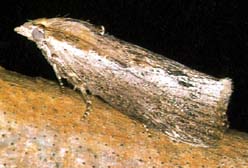
Semiochemicals of Galleria mellonella, the Greater wax moth

Phylum:  Arthropoda
Subphylum:  Uniramia
Class:  Insecta
Order:  Lepidoptera
Family:  Pyralidae
Subfamily:  Galleriinae
Genus:  Galleria
Tribe:  
Author:  Linnaeus
¦
Discuss this Species
  Edit this Record
  Help
Image: Google | Yahoo
Host: Google | Yahoo
Biology: Google | Yahoo
Distribution: Google | Yahoo
¦


Semiochemical(s):

  Vendilo NV  1998  Agrokhimiya  12: 52   
    phytone    ¦Relative ratio of the component¦   ¦(*) indicates that compound is active¦   P
¦Category of the chemical signal
A -   Attractant
Al -   Allomone
K -   Kairomone
P -   Pheromone
Sy -   Synomone¦
 
M
¦Source of the chemical signal
F -   Female
H -   Host (could be of plant or animal origin)
L -   Lure
M -   Male
M&F -   Male and Female
S -   Solider
Q -   Queen
W -   Worker¦
 
¦Amount
pg -   Picogram
ng -   Nanogram
µg -   Microgram
mg -   Milligram
g -   Gram¦


  Turker L  1993  Apidologie  24: 425   
    9Ald    ¦Relative ratio of the component¦   ¦(*) indicates that compound is active¦   A
¦Category of the chemical signal
A -   Attractant
Al -   Allomone
K -   Kairomone
P -   Pheromone
Sy -   Synomone¦
 
L
¦Source of the chemical signal
F -   Female
H -   Host (could be of plant or animal origin)
L -   Lure
M -   Male
M&F -   Male and Female
S -   Solider
Q -   Queen
W -   Worker¦
 
¦Amount
pg -   Picogram
ng -   Nanogram
µg -   Microgram
mg -   Milligram
g -   Gram¦
 
 
    methyl octanoate    ¦Relative ratio of the component¦   ¦(*) indicates that compound is active¦    
¦Source of the chemical signal
F -   Female
H -   Host (could be of plant or animal origin)
L -   Lure
M -   Male
M&F -   Male and Female
S -   Solider
Q -   Queen
W -   Worker¦
 
¦Amount
pg -   Picogram
ng -   Nanogram
µg -   Microgram
mg -   Milligram
g -   Gram¦
 
 
    ethyl octanoate    ¦Relative ratio of the component¦   ¦(*) indicates that compound is active¦    
¦Source of the chemical signal
F -   Female
H -   Host (could be of plant or animal origin)
L -   Lure
M -   Male
M&F -   Male and Female
S -   Solider
Q -   Queen
W -   Worker¦
 
¦Amount
pg -   Picogram
ng -   Nanogram
µg -   Microgram
mg -   Milligram
g -   Gram¦
 
 
    methyl decanoate    ¦Relative ratio of the component¦   ¦(*) indicates that compound is active¦    
¦Source of the chemical signal
F -   Female
H -   Host (could be of plant or animal origin)
L -   Lure
M -   Male
M&F -   Male and Female
S -   Solider
Q -   Queen
W -   Worker¦
 
¦Amount
pg -   Picogram
ng -   Nanogram
µg -   Microgram
mg -   Milligram
g -   Gram¦


  Romel KE  1992  J. Chem. Ecol.  18: 1255   
    11Ald    19 ¦Relative ratio of the component¦   ¦(*) indicates that compound is active¦   P
¦Category of the chemical signal
A -   Attractant
Al -   Allomone
K -   Kairomone
P -   Pheromone
Sy -   Synomone¦
 
M
¦Source of the chemical signal
F -   Female
H -   Host (could be of plant or animal origin)
L -   Lure
M -   Male
M&F -   Male and Female
S -   Solider
Q -   Queen
W -   Worker¦
 
¦Amount
pg -   Picogram
ng -   Nanogram
µg -   Microgram
mg -   Milligram
g -   Gram¦
 
 
    9Ald    3.9 ¦Relative ratio of the component¦   ¦(*) indicates that compound is active¦    
¦Source of the chemical signal
F -   Female
H -   Host (could be of plant or animal origin)
L -   Lure
M -   Male
M&F -   Male and Female
S -   Solider
Q -   Queen
W -   Worker¦
 
¦Amount
pg -   Picogram
ng -   Nanogram
µg -   Microgram
mg -   Milligram
g -   Gram¦
 
 
    11OH    48.3 ¦Relative ratio of the component¦   ¦(*) indicates that compound is active¦    
¦Source of the chemical signal
F -   Female
H -   Host (could be of plant or animal origin)
L -   Lure
M -   Male
M&F -   Male and Female
S -   Solider
Q -   Queen
W -   Worker¦
 
¦Amount
pg -   Picogram
ng -   Nanogram
µg -   Microgram
mg -   Milligram
g -   Gram¦
 
 
    9OH    28.8 ¦Relative ratio of the component¦   ¦(*) indicates that compound is active¦    
¦Source of the chemical signal
F -   Female
H -   Host (could be of plant or animal origin)
L -   Lure
M -   Male
M&F -   Male and Female
S -   Solider
Q -   Queen
W -   Worker¦
 
¦Amount
pg -   Picogram
ng -   Nanogram
µg -   Microgram
mg -   Milligram
g -   Gram¦


  Finn WE  1977  Southwest. Entomol.  2: 62   
    9Ald    ¦Relative ratio of the component¦   ¦(*) indicates that compound is active¦   P
¦Category of the chemical signal
A -   Attractant
Al -   Allomone
K -   Kairomone
P -   Pheromone
Sy -   Synomone¦
 
L
¦Source of the chemical signal
F -   Female
H -   Host (could be of plant or animal origin)
L -   Lure
M -   Male
M&F -   Male and Female
S -   Solider
Q -   Queen
W -   Worker¦
 
¦Amount
pg -   Picogram
ng -   Nanogram
µg -   Microgram
mg -   Milligram
g -   Gram¦
 
 
    11Ald    ¦Relative ratio of the component¦   ¦(*) indicates that compound is active¦    
¦Source of the chemical signal
F -   Female
H -   Host (could be of plant or animal origin)
L -   Lure
M -   Male
M&F -   Male and Female
S -   Solider
Q -   Queen
W -   Worker¦
 
¦Amount
pg -   Picogram
ng -   Nanogram
µg -   Microgram
mg -   Milligram
g -   Gram¦


  Leyrer RL  1973  J. Insect Physiol.  19: 2267   
    9Ald    5 ¦Relative ratio of the component¦   ¦(*) indicates that compound is active¦   P
¦Category of the chemical signal
A -   Attractant
Al -   Allomone
K -   Kairomone
P -   Pheromone
Sy -   Synomone¦
 
M
¦Source of the chemical signal
F -   Female
H -   Host (could be of plant or animal origin)
L -   Lure
M -   Male
M&F -   Male and Female
S -   Solider
Q -   Queen
W -   Worker¦
 
¦Amount
pg -   Picogram
ng -   Nanogram
µg -   Microgram
mg -   Milligram
g -   Gram¦
 
 
    11Ald    2 ¦Relative ratio of the component¦   ¦(*) indicates that compound is active¦    
¦Source of the chemical signal
F -   Female
H -   Host (could be of plant or animal origin)
L -   Lure
M -   Male
M&F -   Male and Female
S -   Solider
Q -   Queen
W -   Worker¦
 
¦Amount
pg -   Picogram
ng -   Nanogram
µg -   Microgram
mg -   Milligram
g -   Gram¦


  Roller H  1968  Acta Entomol. Bohemoslov.  65: 208   
    11Ald    ¦Relative ratio of the component¦   ¦(*) indicates that compound is active¦   P
¦Category of the chemical signal
A -   Attractant
Al -   Allomone
K -   Kairomone
P -   Pheromone
Sy -   Synomone¦
 
M
¦Source of the chemical signal
F -   Female
H -   Host (could be of plant or animal origin)
L -   Lure
M -   Male
M&F -   Male and Female
S -   Solider
Q -   Queen
W -   Worker¦
 
¦Amount
pg -   Picogram
ng -   Nanogram
µg -   Microgram
mg -   Milligram
g -   Gram¦


Reference(s):

Vendilo, N.V., Lebedeva, K.V., Ponomarev, V.L., and Pletnev, V.A. 1998. Identification of the pheromone of the male of the greater wax moth Galleria mellonella (Lepidoptera: Galleriinae). Agrokhimiya. 12:52-56.
 
Turker, L., Togan, I., Ergezen, S., and Ozer, M. 1993. Novel attractants of Galleria mellonella L (Lepidoptera Pyralidae Galleriinae). Apidologie. 24:425-430.
 
Romel, K.E., Scott-Dupree, C.D., and Carter, M.H. 1992. Qualitative and quantitative analyses of volatiles and pheromone gland extracts collected from Galleria mellonella (L.) (Lepidoptera: Pyralidae). J. Chem. Ecol. 18:1255-1268.
 
Finn, W.E., and Payne, T.L. 1977. Attraction of greater wax moth females to male-produced pheromones. Southwest. Entomol. 2:62-65.
 
Leyrer, R.L., and Monroe, R.E. 1973. Isolation and identification of the scent of the moth, Galleria mellonella and a revaluation of its sex pheromone. J. Insect Physiol. 19:2267-2271.
 
Röller, H., Biemann, K., Bjerke, J.S., Norgard, D.W., and McShan, W.H. 1968. Sex pheromones of pyralid moths - I. Isolation and identification of the sex-attractant of Galleria mellonella L. (greater waxmoth). Acta Entomol. Bohemoslov. 65:208-211.
 
 
Citation: El-Sayed AM 2008. The Pherobase: Database of Insect Pheromones and Semiochemicals. <http://www.pherobase.net>.
©2003-2008 The Pherobase - Extensive Database of Insect Pheromones and Semiochemicals. Ashraf M. El-Sayed
Page created on 17-April-2008